Structured Output in LLMs: Getting Reliable JSON from AI and Integrating It into Business Systems
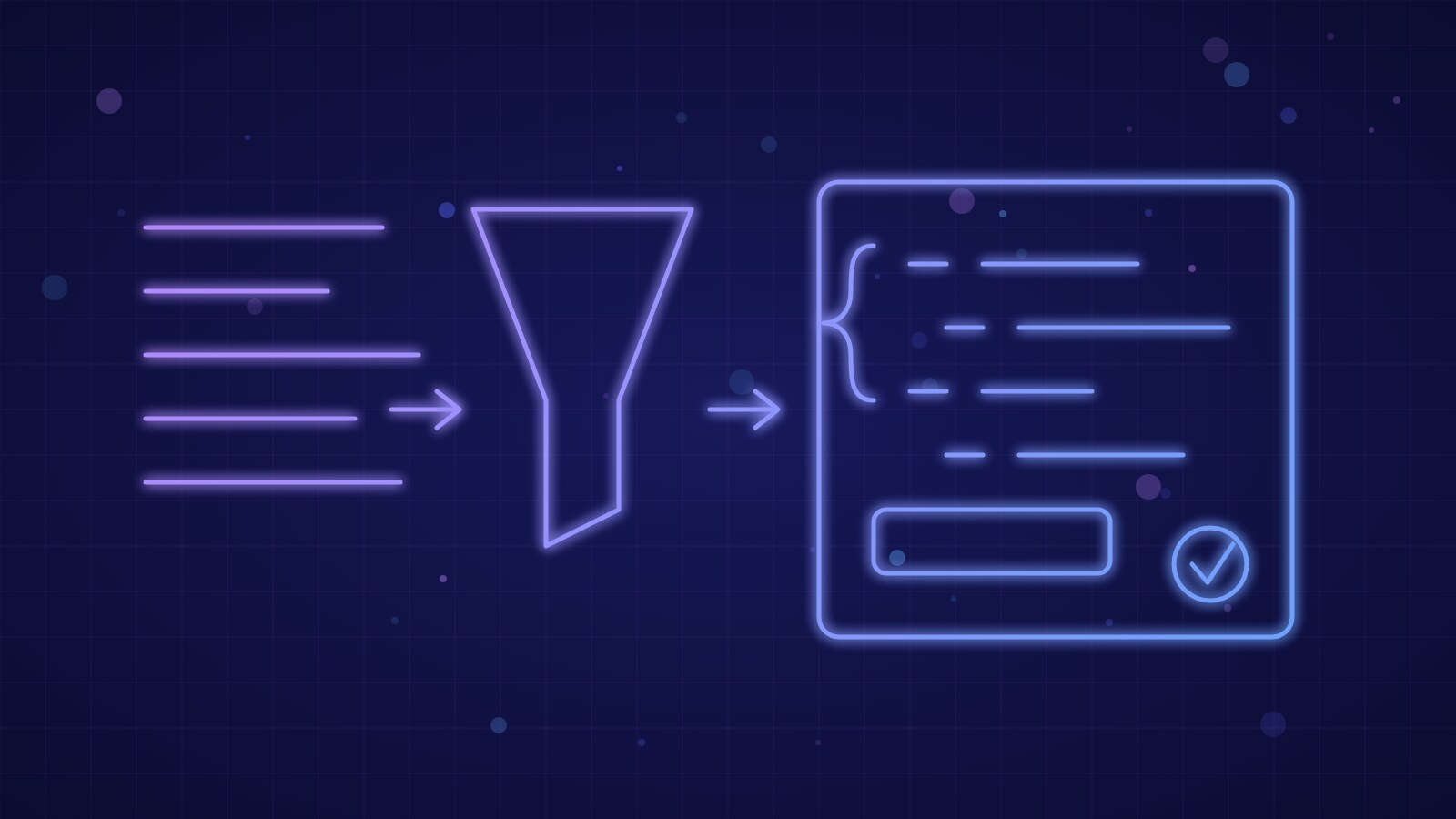
An LLM answers in natural language, but an information system needs data: an amount, a date, a category, a customer code. Asking the model to «answer in JSON» works in demos and fails in production, when a field is missing, a value has the wrong format or the reply is preceded by a polite sentence that breaks the parser. Structured output, meaning output constrained to a JSON schema, turns the LLM from a text generator into a reliable software component, and it is the basis of every serious AI integration with ERP, CRM and automation workflows.
The Problem: Why «Answer in JSON» Is Not Enough
LLMs generate text token by token, with no inherent guarantee of syntax or schema. Even with clear instructions, a small but non-zero share of responses contains missing commas, invented fields, wrong types (a number written as a string with a euro sign) or extra text around the JSON. With 10,000 documents processed per day, even a 1% error rate means a hundred cases to handle by hand or, worse, a hundred wrong values entering the ERP silently. Reliability is not achieved with a more insistent prompt but with constraints enforced by the system.
Structured Output and JSON Schema: How They Work
The APIs of major providers, including OpenAI, Anthropic and Google, let you supply a JSON schema describing the structure, types and allowed values of the response. With strict mode or constrained decoding the model can only generate tokens consistent with the schema: required fields are always present, types are as declared and a field with a list of allowed values (enum) cannot take any other. The same principle underlies function calling, where the schema describes the arguments of a function the system will execute. The schema becomes a contract between the model and the rest of the application.
{
"type": "object",
"properties": {
"supplier": { "type": "string" },
"invoice_number": { "type": "string" },
"date": { "type": "string", "format": "date" },
"total_amount": { "type": "number" },
"currency": { "type": "string", "enum": ["EUR", "USD", "CHF"] },
"confidence": { "type": "number", "minimum": 0, "maximum": 1 }
},
"required": ["supplier", "invoice_number", "date", "total_amount", "currency"],
"additionalProperties": false
}
After the Schema: Semantic Validation and Error Handling
A schema guarantees shape, not correctness of content: an amount can be a valid number and still be wrong. After parsing, business checks are needed: the date is plausible, line items sum to the total, the customer code exists in the master data, the supplier is a known one. When a check fails there are three strategies: retry once with the error message included in the prompt, escalate to a more capable model, or send the case to a human review queue. A confidence or rationale field in the schema helps decide which results to accept automatically and which to verify.
Integration in Workflows: from Documents to Business Systems
Structured output is the natural bridge between AI and automation: in an n8n workflow or a company API, the LLM node extracts data from an email, PDF or support request and returns an object that the next node writes to the CRM, turns into a ticket or sends for approval, without fragile interpretation code. To keep the system under control, version schemas together with code, log every call with input, output and validation status, and track over time the rate of valid first-attempt responses, delays and cost per document.
- Define a JSON schema with required fields, precise types, enums and additionalProperties disabled.
- Use the API's structured output or strict mode instead of relying on the prompt alone.
- Add business checks after parsing: consistent totals, existing codes, plausible ranges.
- Provide a single retry with an explicit error and a human review queue for doubtful cases.
- Version schemas and monitor validity rate, cost and latency per document.
Key takeaway: an LLM becomes integrable when its output is a contract rather than a hope: a binding schema, business validation and a clear path for doubtful cases let you bring AI into ERP, CRM and workflows with the same reliability as any other software component.