Rate Limits, Retries and Fallback Across LLM Providers: AI API Reliability in Production
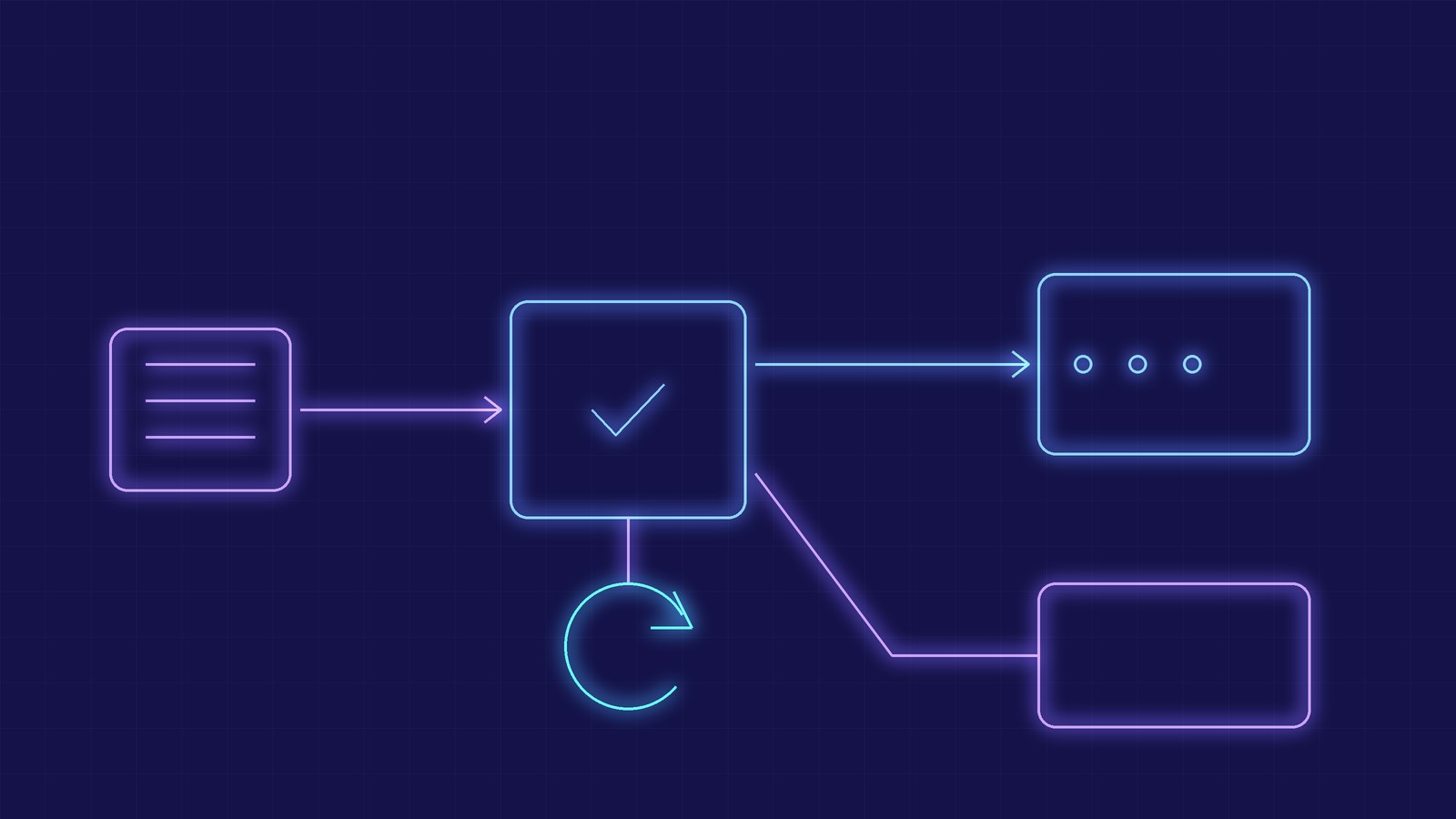
Language model APIs fail more often than an ordinary REST API: they exceed request limits, time out or return temporary errors at peak times. A reliable integration handles this with four tools: retries with exponential backoff, explicit timeouts, queues to smooth out spikes and fallback to a second provider or a smaller model, so a vendor outage does not become a service outage.
Understanding the Error Types
Not all errors are handled the same way. 429 errors (too many requests) and 5xx errors (provider problems) are temporary and can be retried. 400 and 401 errors, caused by a malformed request or wrong credentials, are not fixed by repeating the call and must be reported immediately. Content rejected by a safety filter is a separate case: it needs application-level handling, not a retry.
Provider limits are usually measured in requests per minute and tokens per minute, with different thresholds per model and account tier. Read the response headers that show the remaining limit and reset time, when the provider supplies them, instead of guessing.
Retries with Exponential Backoff and Jitter
Immediate, repeated retries make things worse: many clients retrying at the same instant overload the service even more. Exponential backoff doubles the wait on each attempt (for example 1, 2, 4, 8 seconds) and jitter, a random component, stops all clients from synchronizing.
Always set a maximum number of attempts and an overall time limit. If the provider indicates a wait with the Retry-After header, respect it. Operations with side effects, such as sending an email generated by the model, must be made idempotent so they do not run twice after a retry.
Timeouts, Streaming and Latency Budget
An LLM call can take tens of seconds. Without a timeout, a stuck request holds resources and blocks the user. Set a per-attempt timeout and a total budget consistent with the expected experience: a few seconds to the first token for an interactive chat, even minutes for background processing.
Token streaming improves perceived latency in conversational interfaces, but requires handling interruptions mid-response: the client must be able to discard partial output and retry or switch to the fallback.
Queues and Concurrency Control
For non-interactive workloads, such as classifying a thousand documents, a queue with a limited number of workers is more robust than a thousand parallel calls. The queue smooths peaks, respects provider limits and lets you reprocess only the failed jobs. An n8n workflow can implement this pattern with batches, pauses between requests and dedicated error handling.
An internal rate limiter (token bucket) in front of calls avoids hitting the provider limit and lets you share the quota among applications that use it.
Fallback Across Providers and Models
A fallback is an alternative path when the main provider does not respond: a second vendor, a smaller model or a degraded-mode answer. For it to work, prompts and output schemas must be tested on both models, because the same prompt can give different results.
A circuit breaker avoids hammering a provider that is failing: after a threshold of consecutive errors you stop calling it for a short period and go straight to the fallback, then retry later with a few probe requests. A gateway that exposes a single interface to several providers simplifies implementation.
- Retry only temporary errors (429 and 5xx), not request errors.
- Use exponential backoff with jitter, a maximum number of attempts and respect Retry-After.
- Set per-attempt timeouts and an overall latency budget.
- Make actions with side effects idempotent before enabling retries.
- Use queues and internal rate limiters for non-interactive workloads.
- Test prompts and schemas on several models and use a circuit breaker for fallback.
Monitoring and Alerts
Measure error rate by type, p50 and p95 latency, number of retries, share of requests served by the fallback and cost per request. A rise in retries or fallbacks is an early sign of a provider issue or a limit set too tight. Set alerts on thresholds that genuinely require action.
Key takeaway: a reliable LLM integration assumes the provider will fail: retries with backoff and jitter, timeouts, queues, rate limiters, circuit breakers and a tested fallback keep the service running through peaks and outages.