IT Governance for SMEs: How to Structure Roles, Processes and Technology Decisions in 2026
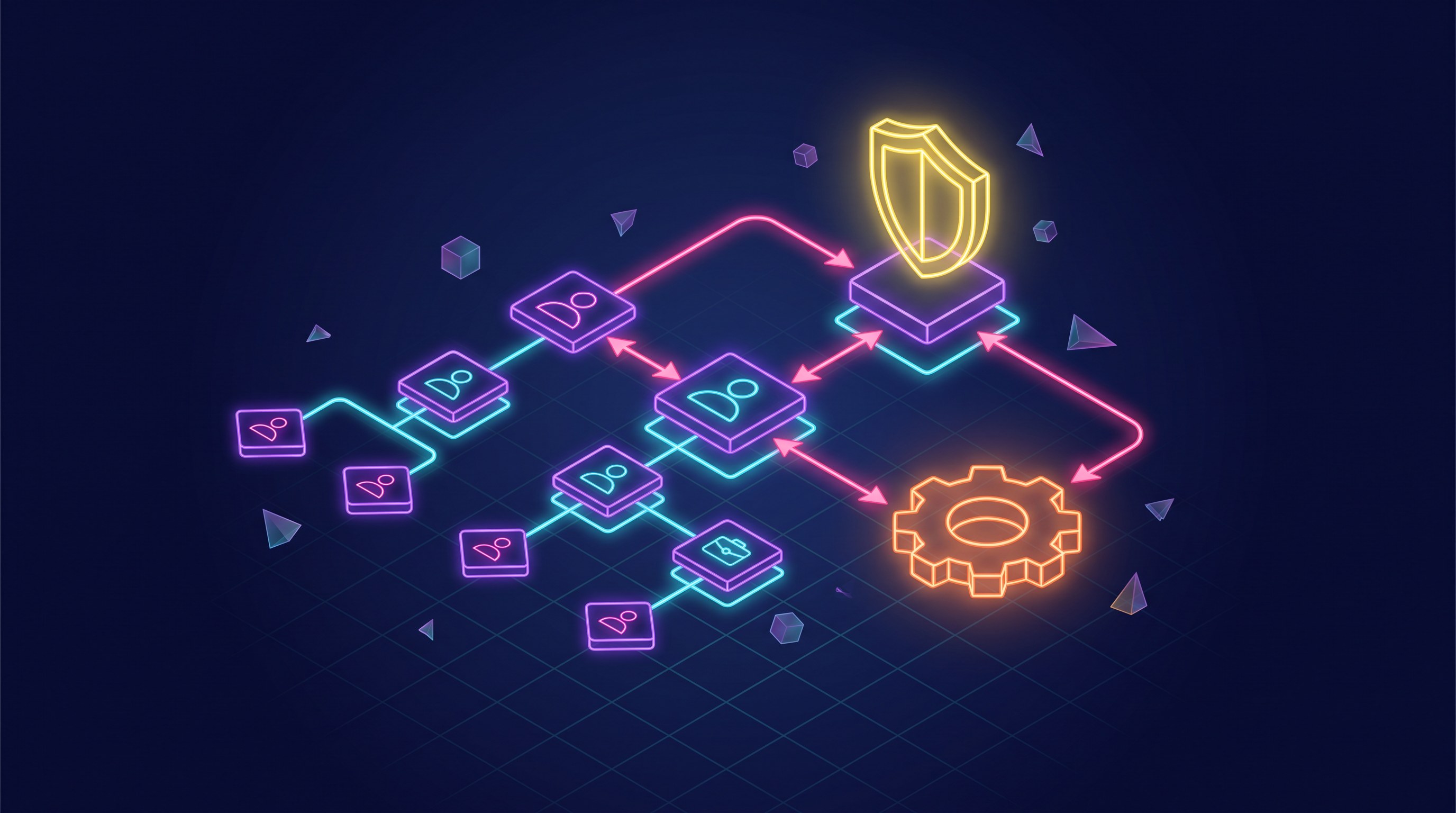
In most SMEs, technology decisions are made reactively: a new management software is bought when the old one can't keep up, a cloud provider is evaluated when the local server fails, an AI tool is integrated because a competitor adopted one. Without explicit IT governance — who decides what, by which criteria, with which budget and risk control — every technology investment becomes an isolated decision, often contradicting one made six months earlier. IT governance isn't big-company bureaucracy: it's the minimal structure that lets an SME grow its technology coherently with business strategy, instead of by random accumulation of tools.
The Problem of Technology Decisions Made by a Single Person
In smaller SMEs, IT decisions often fall to a single figure — the owner, a part-time IT manager, a trusted external consultant — without a process checking alignment with business goals, long-term cost sustainability, or vendor lock-in risk. This isn't an individual competence problem, it's structural: no single person has full visibility into every process a technology choice will eventually touch, and decisions made in isolation tend to optimize the immediate problem while ignoring systemic impact.
Roles and Responsibilities: Who Decides What
Effective IT governance for an SME doesn't require a full-time CIO, but it does require three roles to be clearly distinct even if held by few people: who sets technology strategy in line with business goals, who evaluates and selects specific solutions, and who approves budget against explicit return-on-investment criteria. Even in a five-person structure, separating these three decision points — even with just a shared checklist — drastically reduces impulsive technology purchases.
The Decision Process: From Request to Risk Assessment
A minimal decision process for technology investments should answer four questions before every purchase: what business problem it solves, not what technical feature it adds; what it costs over the full lifecycle, not just the initial list price; what level of vendor dependency it introduces, and with what exit plan; who is responsible for maintenance and adoption once implemented.
Governance and AI: A New Layer of Complexity
Widespread adoption of generative AI tools adds a dimension traditional IT governance often doesn't cover: what company data can be sent to an external AI service, what decisions can be delegated to an automated system without human review, and how compliance with regulations like the EU AI Act is documented. Extending existing IT governance to explicitly include these questions prevents AI adoption from outpacing the organization's ability to control its risks.
- Clearly separate who sets strategy, who evaluates solutions and who approves budget, even in a small team.
- Formalize a minimal evaluation process: business problem, total lifecycle cost, lock-in risk, adoption owner.
- Keep an up-to-date inventory of all technology tools in use, including who adopted them and why.
- Extend existing governance to explicitly cover AI tool adoption and the use of company data with external services.
- Review major technology decisions at least once a year, checking whether the expected return actually materialized.
The bottom line: IT governance in an SME shouldn't slow processes down, it should speed them up over time: every technology decision made with an explicit criterion reduces the work needed to fix bad decisions made without one.