Procurement and Supply Chain Automation with n8n for SMEs in 2026
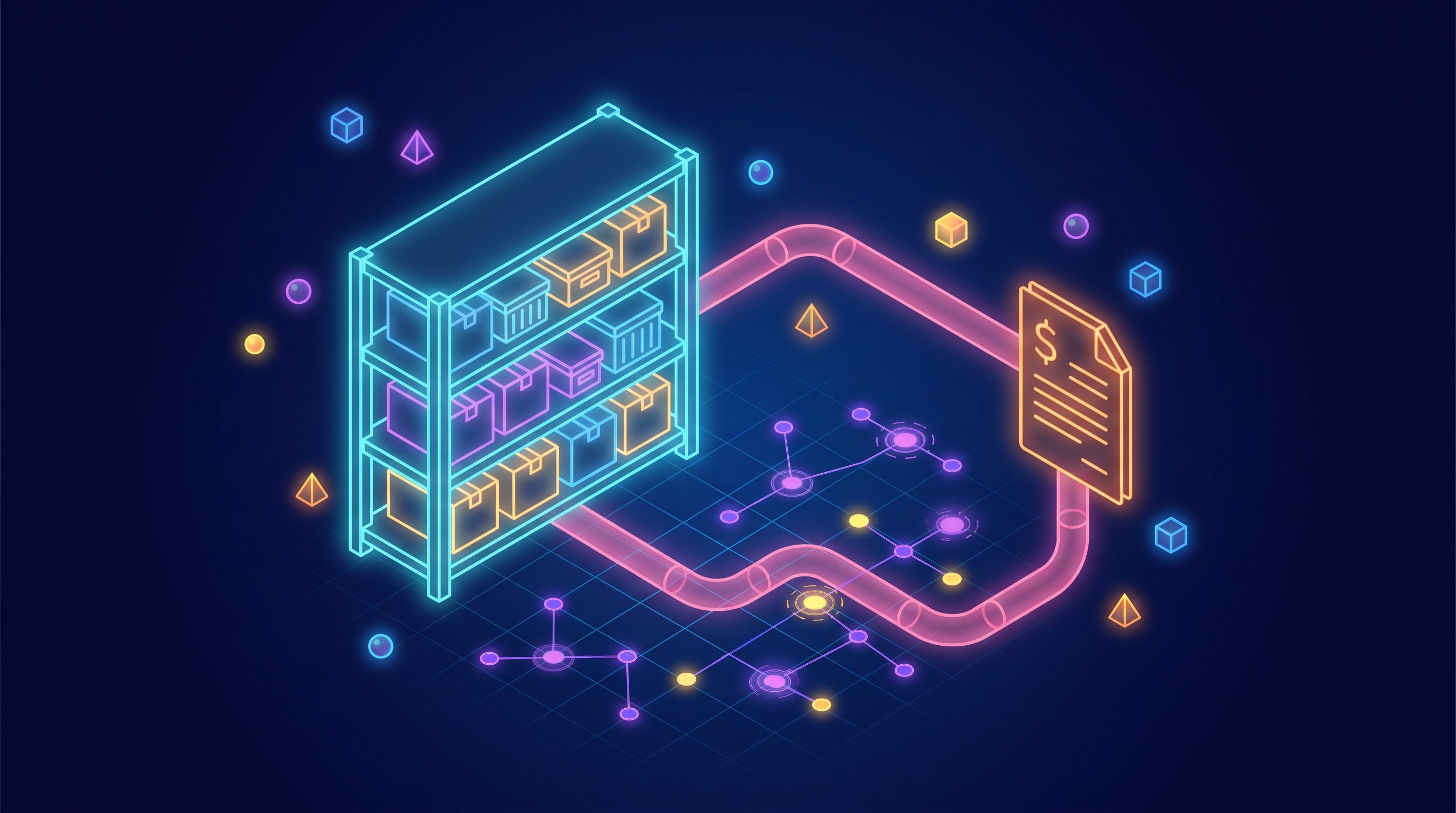
In most manufacturing and distribution SMEs, procurement still lives inside spreadsheets shared over email, phone calls to suppliers to check availability, and reorders made from memory when someone notices stock is running low. The result is a mix of excess inventory on some items and stockouts on others, order management time that eats hours every week, and no real-time visibility into supply chain status. Automating procurement with tools like n8n doesn't require replacing the existing ERP: it requires connecting the systems that already exist — warehouse, ERP, supplier email, invoicing — with workflows that eliminate repetitive manual work.
Automatic Reordering Based on Stock Thresholds
The most immediate use case is automated inventory monitoring: an n8n workflow periodically queries the ERP or warehouse system, compares each item's stock level against a configured minimum threshold and, when the threshold is breached, automatically generates a reorder request to the default supplier, including a quantity calculated from recent average consumption. SMEs adopting this flow typically report a drastic reduction in stockouts, because reordering no longer depends on someone's memory but on a rule that runs every day without exception.
Automatic Quote Comparison Across Suppliers
For non-recurring purchases, a workflow can automate sending quote requests to multiple suppliers at once, collect replies via email (even parsing PDF attachments with an AI model for data extraction), and automatically populate a comparison sheet with price, delivery time and terms. The buyer, instead of spending hours gathering and transcribing quotes, receives a ready-made comparison and spends time on the decision, not on data collection.
Syncing Order, Warehouse and Invoicing
Once a purchase order is confirmed, an automation workflow can propagate the information to every system involved: update expected stock in the warehouse system, record the spend commitment in accounting, and on goods receipt automatically trigger a compliance check between what was ordered, what was received and what the supplier invoiced, flagging discrepancies instead of leaving them to surface during monthly reconciliation.
Real-Time Visibility Into the Supply Chain
Beyond execution, automation produces a valuable byproduct: structured data on every stage of the procurement process. A workflow that logs every event — request sent, quote received, order confirmed, goods received — into a centralized sheet or dashboard turns an opaque process into a traceable flow, making it easy to spot the slowest suppliers, recurring bottlenecks and product categories with the highest delivery time variability.
- Start with the process generating the most repetitive manual work, typically threshold-based reordering.
- Connect existing systems (ERP, email, spreadsheets) instead of replacing them: n8n integrates via API, webhooks and native connectors.
- Automate quote comparison for non-recurring purchases first: it's where buyer time is recovered fastest.
- Add automatic compliance checks between order, receipt and invoice to catch discrepancies before monthly reconciliation.
- Track every process event to build historical visibility into supplier performance, not just automate a single step.
The bottom line: supply chain automation doesn't require a multi-year ERP project: targeted n8n workflows on the highest-friction points — reordering, quote comparison, reconciliation — free up hours of work every week with a modest investment and an implementation time of a few weeks.